


Guayusa Tea in Canada: Taste, Caffeine and How to Brew
Guayusa tea for Canadians: what the Amazon holly leaf tastes like, how its caffeine compares with coffee and yerba mate, and how to brew it…
Country, language & currency
or
The Tea Journal · Brewing Guides · Herbal Tea
By the Tealyra Tea Team · · 5 min read

In short: Tulsi, or holy basil, is a caffeine-free herbal tea from India with a fresh, slightly spicy flavour: think mint, clove and a touch of liquorice, with a clean, gently warming finish. It is not the sweet basil you put on pizza, though both belong to the mint family. Brew 1 to 2 teaspoons (about 2 g) of dried leaf per 250 ml of water at 95 to 100°C (just off the boil) for 5 to 7 minutes. It takes honey and lemon well and makes a surprisingly good iced tea.
Tulsi is one of the most searched herbal teas in Canada, and also one of the most misunderstood. Here is what it is, what it tastes like, and how to brew it so it tastes its best.
Tulsi is the Sanskrit name for holy basil (Ocimum tenuiflorum), a bushy plant with small purple-green leaves that grows across India and Southeast Asia. It is drunk daily in many Indian households, often more than coffee, and is a traditional ingredient in Ayurvedic blends. Many families grow a plant in the courtyard and pick a few leaves for the pot each morning.
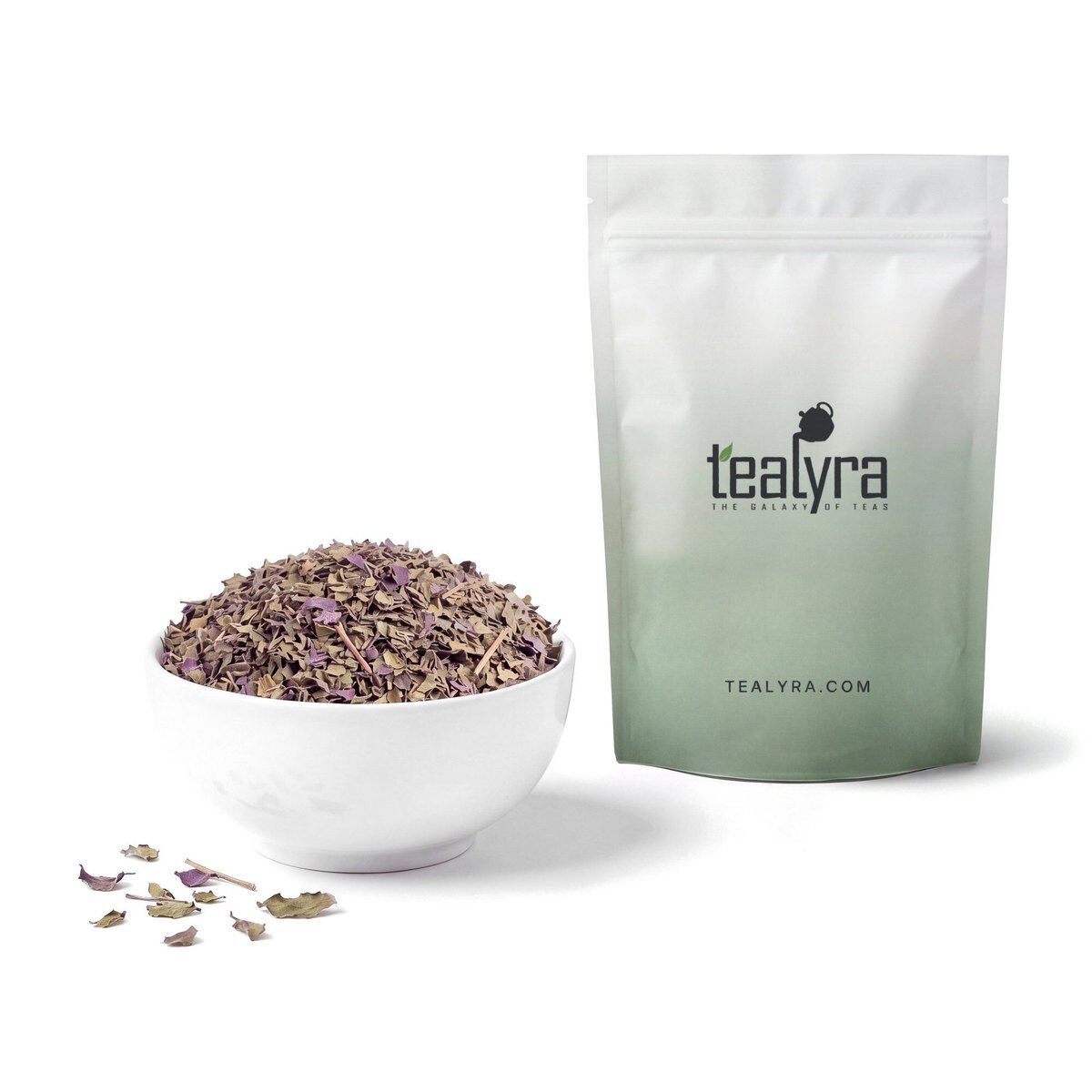
Three varieties are common. Rama tulsi is the mildest, with green leaves and a soft, sweet aroma. Krishna tulsi has purple-tinged leaves and a sharper, more peppery taste. Vana tulsi, the "forest" type, is the most fragrant and lemony. Our Tulsi Holy Basil is pure Vana tulsi, grown and dried in the traditional way in India. You will find it and the blends built on it on our tulsi tea page.
If you have never tried it, the first sip is a small surprise. Tulsi is herbal and green like a garden herb, but with a spice-cupboard side that sweet basil does not have:
Because it contains no caffeine, it works as an evening cup or as a tea for anyone who wants flavour without the buzz. Compared with Peppermint, tulsi is less cooling and more rounded; compared with Egyptian Chamomile, it is brighter and spicier rather than soft and apple-like.
| Tulsi (holy basil) | Sweet basil (Genovese) | |
|---|---|---|
| Plant | Ocimum tenuiflorum, India and Southeast Asia | Ocimum basilicum, Mediterranean cooking |
| Leaf | Small, slightly hairy, green or purple | Large, glossy, bright green |
| Aroma | Clove, mint, pepper, lemon | Anise, sweet and green |
| Use | Dried for tea, fresh in some Thai dishes | Pesto, salads, sauces |
| As a tea | Spicy, warming, holds up to honey and ginger | Mild and grassy, rarely brewed on its own |
So if a friend tells you tulsi tea tastes "like pesto," they have not had the real thing. The two plants are cousins, not twins.
Dried tulsi is forgiving. Hotter water and longer steeps pull out more spice; cooler, shorter steeps keep it light and lemony.
Steep double strength (4 g per 250 ml) for 7 minutes, pour over a full glass of ice, and finish with lemon and a few fresh mint leaves. For cold brew, put 10 g of tulsi in a 1-litre jug of cold water and refrigerate overnight; the result is lighter, almost floral, with no spice bite.
Browse the rest of our caffeine-free range on the herbal tea page if you want ready-made blends.
Look for whole or coarsely cut leaf with a visible green colour and a strong, fresh smell when you open the bag. Dusty, grey-brown leaf has usually been sitting too long. Keep it in an airtight, opaque tin or a resealable pouch away from the stove and the window; dried herbs lose their aroma faster than tea leaves do. Used within a year of opening, tulsi stays bright and spicy. A 100 g pouch gives you roughly 50 cups, so it is an inexpensive tea to keep on the shelf through the winter.
No. Tulsi is a herb, not a tea plant, so it is naturally caffeine-free. That makes it a good evening cup and a base for caffeine-free chai.
Fresh and herbal with notes of mint, clove and liquorice, a light peppery edge and a clean, warming finish. It is spicier than chamomile and rounder than peppermint.
Five to seven minutes in water just off the boil. Unlike green tea it will not turn bitter if you forget it for a few extra minutes; it just gets spicier.
Not really. Sweet basil makes a mild, grassy infusion with an anise note, nothing like the clove-and-mint character of tulsi. Dried holy basil is the one to buy for tea.
On its own it is usually drunk plain or with honey and lemon. In a spiced, chai-style brew with cinnamon and cardamom, a splash of milk works well.
Guayusa tea for Canadians: what the Amazon holly leaf tastes like, how its caffeine compares with coffee and yerba mate, and how to brew it…

Lemon verbena tea explained: what it tastes like, how it differs from lemongrass and lemon balm, how to brew it hot or iced, and what to…

How to brew dried hibiscus flowers: ratio and steep time for a hot cup, a 12-hour cold brew, agua de jamaica, hibiscus syrup and what to…