


Lemon Verbena Tea: A Bright, Caffeine-Free Cup
Lemon verbena tea explained: what it tastes like, how it differs from lemongrass and lemon balm, how to brew it hot or iced, and what to…
Country, language & currency
or
The Tea Journal · Brewing Guides · Herbal Tea
By the Tealyra Tea Team · · 5 min read

In short: guayusa (pronounced gwy-YOU-sa) is the dried leaf of an Amazonian holly tree, a cousin of yerba mate. It brews a smooth, naturally sweet, lightly earthy cup with about as much caffeine as a strong black tea and none of the bitterness. Use 1 tablespoon (3 g) per 250 ml of water at 90-95°C and steep 5 to 7 minutes; a French press is the easiest way to make it, and it is just as good cold brewed overnight.
Guayusa has quietly become one of the most searched herbal teas in Canada, usually by people looking for a coffee alternative that does not taste like grass or medicine. If that is you, this guide covers what it is, how it compares with the drinks you already know, and the brewing method that gives the best cup.
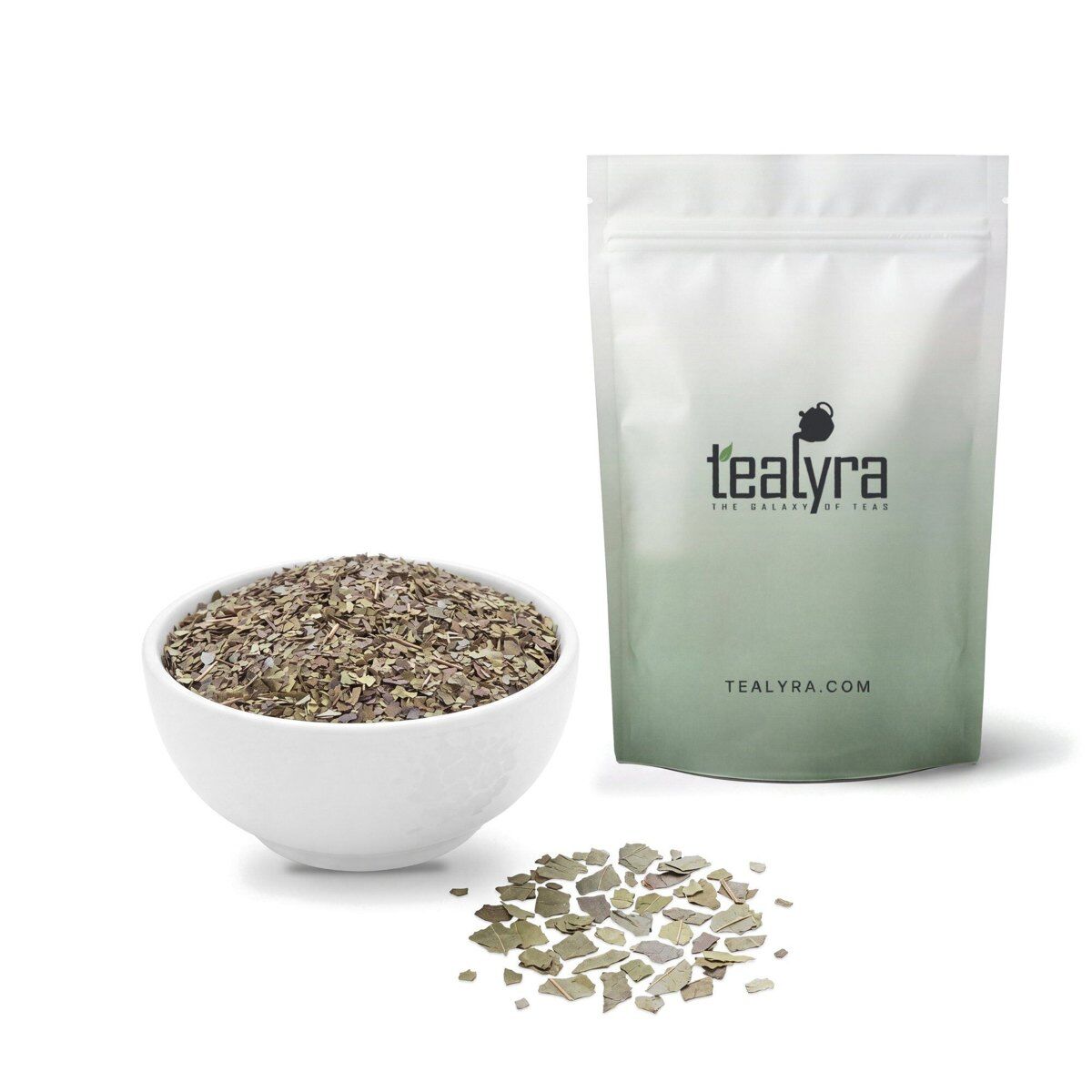
Guayusa (Ilex guayusa) is a holly tree native to the upper Amazon in Ecuador, where Kichwa families have grown it in forest gardens and brewed it before dawn for centuries. The large leaves are picked by hand, dried and cut, and that is the whole process: no oxidation, no roasting, no blending. Botanically it is a close relative of yerba mate, which explains the family resemblance in the cup, but the leaf is larger, milder and smoother.
Because it is a holly and not Camellia sinensis, guayusa is technically a tisane rather than a tea. It still contains caffeine, which sets it apart from almost every other herbal infusion on the shelf.
Think of a very clean black tea with the edges sanded off. The cup is amber to deep gold, with a gentle sweetness, a soft earthy base and a faint note of green leaf and dried fruit. There is almost no astringency, which is why it can steep for 7 minutes, or sit in a thermos for an hour, without turning harsh. People who find yerba mate too smoky or vegetal usually like guayusa straight away.
It takes milk and honey well, but most Canadians who drink it daily end up taking it plain, the way they would a good oolong.
| Guayusa | Yerba mate | Coffee | Black tea | |
|---|---|---|---|---|
| Plant | Amazon holly leaf | South American holly leaf | Roasted coffee bean | Tea leaf |
| Taste | Smooth, sweet, earthy | Grassy, smoky, bitter edge | Roasted, bitter, bold | Malty, brisk, tannic |
| Caffeine per 250 ml | About 60-90 mg | About 70-80 mg | About 95-120 mg | About 40-60 mg |
| Bitterness | Very low | Medium | Medium-high | Low-medium if oversteeped |
| Oversteeping | Forgiving | Turns bitter | n/a | Turns tannic |
| Best brewed in | French press, teapot, cold brew | Gourd, French press | Any coffee maker | Teapot |
The practical difference from yerba mate is forgiveness. Mate wants water below 80°C and short contact or it goes bitter; guayusa can take near-boiling water and a long steep. If you already drink mate, our yerba mate guide for Canada covers gourd and French press methods, and the same French press works for both.
The leaf is cut coarse and it sinks, which makes a French press the natural tool. Here is the method for a 500 ml press, enough for two mugs.
No French press? A teapot with a fine strainer or a large infuser basket works the same way. Tea bags and small ball infusers are too tight for the coarse leaf.
Cold brewing is where guayusa shines, especially for a commute or a long drive. Put 10 g of leaf (about 3 tablespoons) in a 1 litre jar, fill with cold water, and leave it in the fridge for 8 to 12 hours. Strain. The result is sweeter and rounder than the hot version, with the same caffeine, and it keeps for three days. In summer pour it over ice with a squeeze of lime; in a Canadian January, heat it gently and it tastes like a fresh brew.
Guayusa carries other flavours without losing its own. A few pairings that work at home:
You will find guayusa alongside mate and other caffeinated leaves in our yerba mate collection, and the wider herbal tea range has the mint, ginger and spice to pair with it.
Yes. A 250 ml cup brewed as above has roughly 60 to 90 mg, between a black tea and a cup of coffee. It is one of the few herbal infusions with natural caffeine.
No, but they are close relatives: both are holly leaves from South America. Guayusa is smoother, sweeter and far less bitter, and it tolerates hotter water and longer steeping.
Smooth and naturally sweet, with a soft earthy base and no bitterness. Most people compare it with a mild, clean black tea.
1 tablespoon, about 3 g, per 250 ml of water. Steep 5 to 7 minutes at 90-95°C, or cold brew 10 g per litre overnight.
Yes. The leaf gives a good second infusion if you add a couple of minutes to the steep time.
Lemon verbena tea explained: what it tastes like, how it differs from lemongrass and lemon balm, how to brew it hot or iced, and what to…

How to brew dried hibiscus flowers: ratio and steep time for a hot cup, a 12-hour cold brew, agua de jamaica, hibiscus syrup and what to…

Greek mountain tea (sideritis) explained: what it is, how it tastes, why Greeks simmer it instead of steeping it, and how to brew it at…