


Chrysanthemum Tea: What It Tastes Like and How to Brew It
What chrysanthemum tea tastes like and how to brew it: water at 90-95°C, 4-6 whole flowers per cup, steep times, pairings and rock sugar…
Country, language & currency
or
By the Tealyra Tea Team · · 5 min read

In short: Greek mountain tea is a caffeine-free herbal tea made from the dried flowering stems of Sideritis, a hardy plant that grows on rocky slopes above 1,000 m across Greece and the Balkans. It brews a glowing golden cup with soft notes of sage, wildflowers, honey and a hint of mint. Simmer a heaped tablespoon (about 3 g) in 500 ml of water for 5-10 minutes, strain, and add honey or lemon if you like.
In Greece it is simply tsai tou vounou, "tea of the mountain", and it has been gathered by shepherds and villagers for centuries. It is also one of the easiest herbal teas to fall in love with: nothing sharp, nothing bitter, just a warm, gentle cup that suits a grey November afternoon as well as a summer evening on the deck.
The plant is Sideritis, sometimes called ironwort or shepherd's tea. Several species are used, each tied to a region: Sideritis scardica from Mount Olympus and the north, Sideritis raeseri from Parnassus and central Greece, and Sideritis syriaca from the mountains of Crete. The plants are low, silvery-green and fuzzy, with spikes of small yellow flowers in early summer.
The whole plant is used: stems, silvery leaves and the small yellow flower heads, dried and cut into short pieces. In Greece you will often see it sold as long whole stems tied in bundles; our Greek Mountain Tea comes cut, which brews faster and fits an ordinary teapot or infuser.
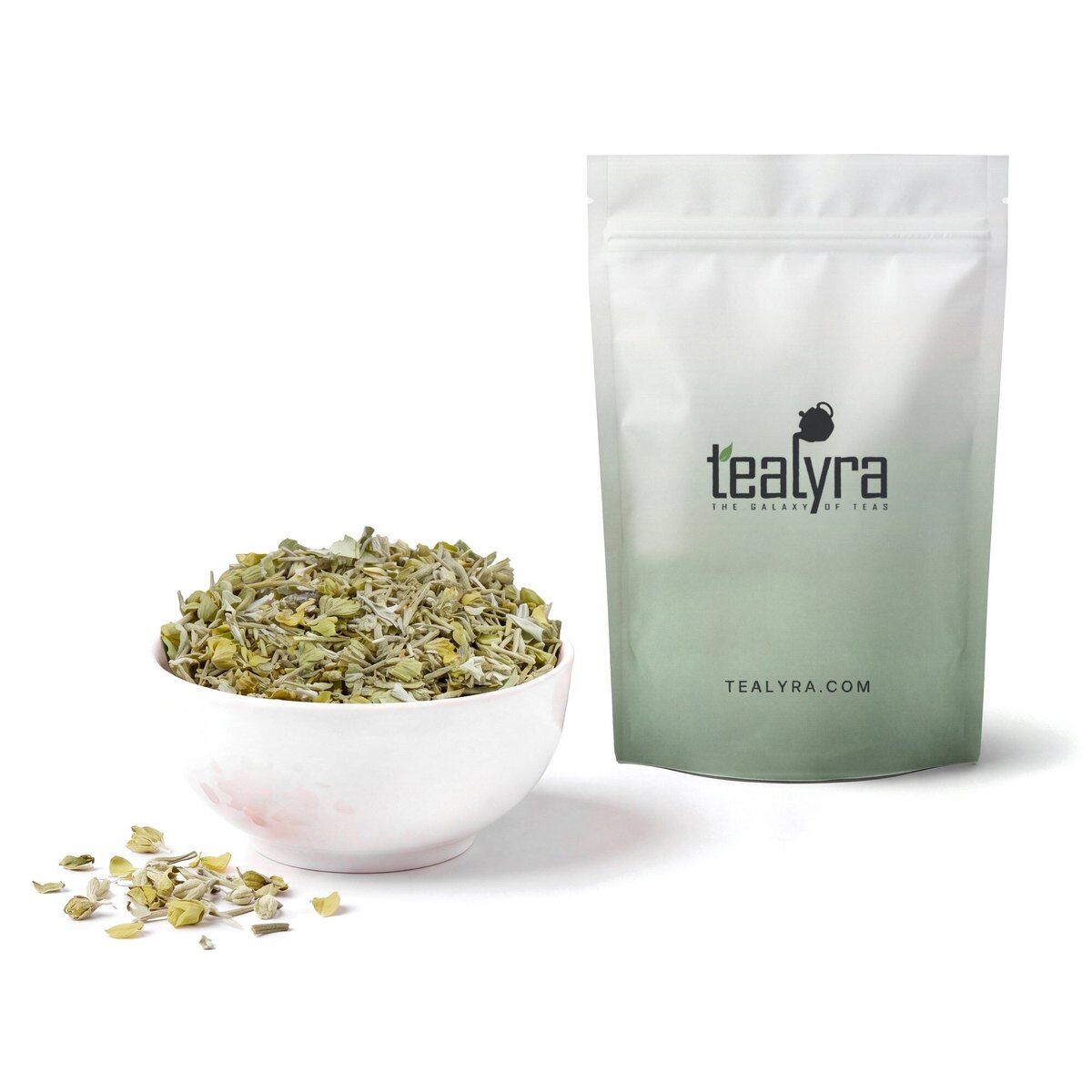
The cup is pale gold and clear. The aroma is herbal and lightly floral, close to dried meadow flowers. On the palate it is mild and rounded: a soft sage note, a honey-like sweetness, a touch of mint or citrus at the end, and a smooth, slightly earthy finish. There is no bitterness, no tannin and no caffeine, so you can brew it strong and drink it late without a second thought.
If you already enjoy chamomile or linden, Greek mountain tea will feel familiar but lighter and more savoury. If you find chamomile too sweet, this is a good alternative. It is the kind of tea that pairs well with a slice of lemon loaf or a spoon of thyme honey rather than anything heavily spiced.
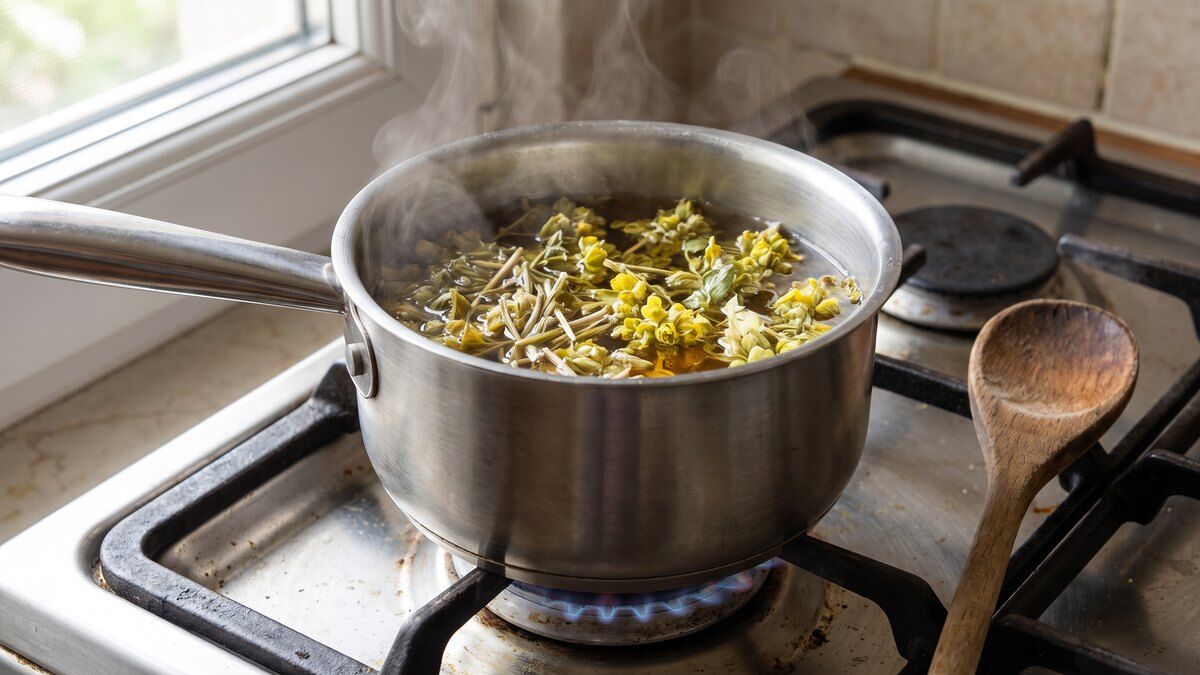
Greeks rarely steep this tea in a cup. The woody stems give up their flavour slowly, so the traditional method is to simmer them in a small pot on the stove, which pulls out far more flavour and colour. Both ways work; the pot gives the fuller cup.
Put a heaped tablespoon in a teapot or a large infuser and pour 500 ml of water at 100°C (212°F) over them. Cover and steep for 8-10 minutes. The cup is lighter than the simmered version, so use the full 10 minutes.
| Stovetop | Teapot | |
|---|---|---|
| Herb per 500 ml | 1 heaped tablespoon (about 3 g) | 1 heaped tablespoon (about 3 g) |
| Water | Cold, brought to a boil | 100°C (212°F) |
| Time | Simmer 5-10 min + 2-3 min rest | Steep 8-10 min |
| Colour | Deep gold | Pale gold |
| Second brew | Yes, simmer again 10 min | Yes, steep 10-12 min |
The herb has plenty left after one brew. Simmer or steep them a second time with a little less water, and you will get another good pot.
Simmer as above but double the herb, let the pot cool, strain, and chill. Pour over ice with a slice of lemon and a sprig of fresh mint. The honey-floral notes come through beautifully cold, and because there is no tannin it never turns cloudy or astringent in the fridge. It keeps for about three days.
In a Greek village kitchen the tea arrives in a glass, not a cup, with a small dish of honey and a plate of koulourakia or a slice of bread and cheese. It is an everyday drink and a welcome for guests, part of the old custom of xenia, or hospitality to strangers. A few ways to bring that home in Canada:
Look for a silvery-green colour with plenty of visible yellow flower heads; brown, dusty herb is old. A 50 g pouch makes roughly 15 pots. Store it in a sealed container away from light and humidity and it keeps its aroma for well over a year. You will find it with our other single herbs in the herbal tea collection, shipped from our Canadian warehouse.
No. Sideritis is not related to the tea plant, so the cup is naturally caffeine-free and suits any time of day.
Simmering on the stove for 5-10 minutes is the traditional way and gives a fuller, deeper gold cup. Steeping in a teapot for 8-10 minutes works if you are short on time, with a lighter result.
About a heaped tablespoon, or 3 g, per 500 ml of water. Use more for iced tea or if you like a stronger, more honeyed cup.
Yes. The same herb gives a good second pot; simmer it again for 10 minutes with slightly less water.
Mild and smooth, with sage, wildflower and honey notes and a hint of mint. There is no bitterness, so it needs no sweetener, although Greeks usually add a little honey.
What chrysanthemum tea tastes like and how to brew it: water at 90-95°C, 4-6 whole flowers per cup, steep times, pairings and rock sugar…

Spearmint vs peppermint tea: how they differ in taste, aroma and caffeine (both are caffeine-free), how to brew each one and which mint tea…

How to prepare yerba mate in Canada: the traditional gourd and bombilla method, an easy French press version, water temperature, ratios and…