


Spearmint vs Peppermint Tea: Taste, Caffeine, Brewing
Spearmint vs peppermint tea: how they differ in taste, aroma and caffeine (both are caffeine-free), how to brew each one and which mint tea…
Country, language & currency
or
The Tea Journal · Brewing Guides · Herbal Tea
By the Tealyra Tea Team · · 4 min read

In short: chrysanthemum tea is an infusion of whole dried chrysanthemum flowers. It brews a clear golden cup with a soft floral aroma, a gentle honey-like sweetness and a clean finish, and it is naturally caffeine-free. Use 4 to 6 flowers (about 2 g) per 250 ml of water at 90 to 95°C (195 to 205°F) and steep for 4 to 5 minutes. The same flowers give two or three cups.
On a dark November evening in Canada, a glass pot of chrysanthemum tea is a small pleasure: the dry buds slowly open in the hot water and the kitchen fills with a light, floral scent. It is one of the most popular everyday drinks in China and a favourite in dim sum restaurants across Toronto and Vancouver. Here is what to expect from the cup and how to brew it well at home.
Chrysanthemum tea is a tisane, not a "true" tea from the tea plant. It is made from the flowers of Chrysanthemum morifolium, harvested in autumn, gently dried and sold whole. In China it has been brewed for centuries, at home and in restaurants, often with a little rock sugar.
Because there are no tea leaves in it, chrysanthemum tea has no caffeine, which makes it an easy choice for late evenings.
Expect a delicate, floral cup rather than a bold one.
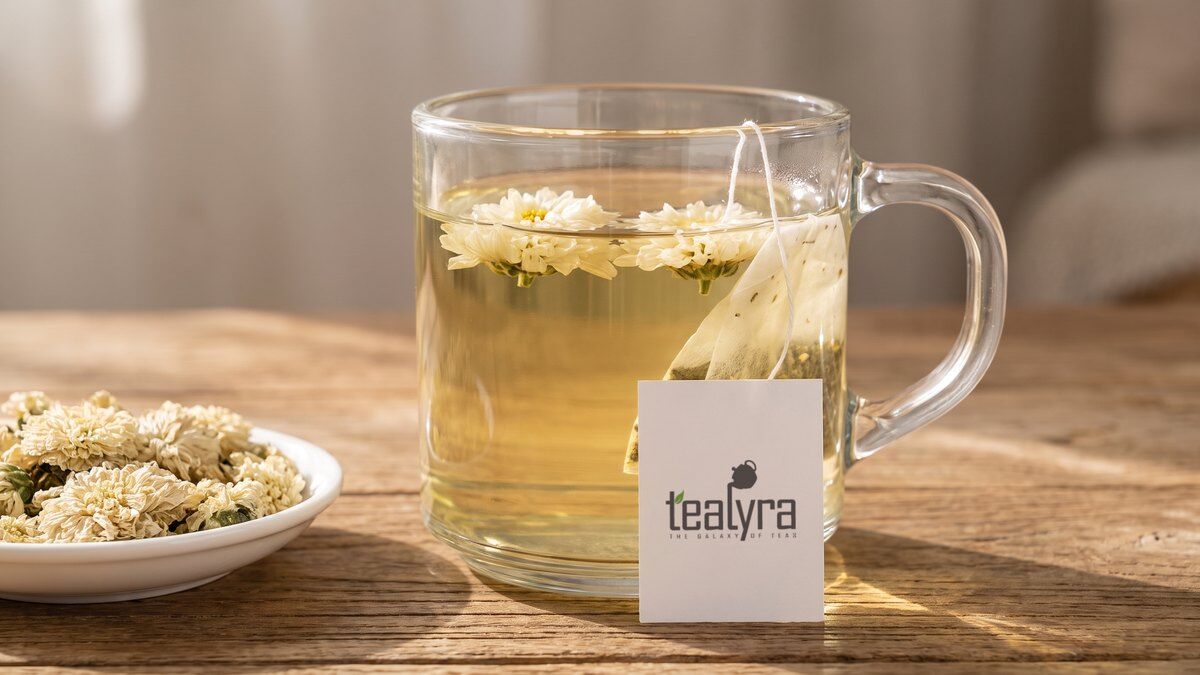
Our Chrysanthemum Tea is made of whole white flowers that open fully in the cup, so it is as nice to watch as it is to drink.
| One mug | Teapot | |
|---|---|---|
| Flowers | 4-6 (about 2 g) | 10-15 (about 5 g) |
| Water | 250 ml | 750 ml |
| Temperature | 90-95°C (195-205°F) | 90-95°C (195-205°F) |
| Steep time | 4-5 minutes | 5-6 minutes |
| Re-steeps | 2-3 | 2 |
A clear glass teapot makes the most of the show. Our Glass Teapot & Kettle 60oz can go on the stovetop, and you will find more pots in our teapots and kettles section.
If you have had dim sum in Canada, you have probably been offered chrysanthemum tea alongside jasmine and pu-erh. Its light, clean taste is a good partner for rich, savoury dishes like dumplings, buns and fried noodles, which is why restaurants keep a pot topped up for the whole meal. It is easy to recreate at home for a weekend brunch.
Dried flowers are fragile and pick up smells easily. Keep them in an airtight tin or resealable pouch, away from light, heat and spices, at room temperature. Stored this way they keep their colour and aroma for about a year. In damp weather, close the bag right after use: the flowers absorb moisture and soften. Browse more caffeine-free options in our herbal teas collection.
No. Pure chrysanthemum tea is made only from dried flowers, so it is naturally caffeine-free. Blends with green tea or pu-erh do contain caffeine.
Use 4 to 6 whole flowers, about 2 g, per 250 ml cup. For a stronger flavour, add one or two more rather than steeping much longer.
Yes. The same flowers give two or three cups. Add fresh water at 90 to 95°C and steep a minute or two longer each time.
Rock sugar and goji berries are traditional. It also pairs well with green tea, jasmine tea and ripe pu-erh, and it can be served over ice.
Usually it has steeped too long or with too many flowers. Use fewer flowers, keep the steep to 4 to 5 minutes and lift the flowers out of the cup when it is ready.
Spearmint vs peppermint tea: how they differ in taste, aroma and caffeine (both are caffeine-free), how to brew each one and which mint tea…

How to prepare yerba mate in Canada: the traditional gourd and bombilla method, an easy French press version, water temperature, ratios and…

What dandelion root tea tastes like, how roasted and raw root differ, and how to brew a rich, caffeine-free cup, plus pairing ideas with…