


Burdock Root Tea: Taste, Roasted vs Raw, How to Brew It
Burdock root tea is a caffeine-free root infusion with an earthy, sweet, slightly bitter taste. Roasted vs raw root, how to brew it and…
Country, language & currency
or
The Tea Journal · Brewing Guides · Herbal Tea
By the Tealyra Tea Team · · 6 min read

In short: nettle tea is a caffeine-free herbal infusion made from the dried leaves of stinging nettle, the same plant that grows along ditches, riverbanks and woodland edges across Canada. Dried and brewed, it loses its sting completely and gives a pale green cup that tastes fresh, grassy and lightly savoury, close to a mild spinach broth with a clean finish. Use 1 heaping teaspoon (about 2 g) of dried leaf per 250 ml of water at 95 to 100 °C (203 to 212 °F), steep 7 to 10 minutes covered, and add lemon, mint or honey if you want to brighten it.
Nettle is one of the most familiar wild plants in the country and one of the least familiar in the teacup. Here is what it tastes like, how to brew it so it stays fresh rather than flat, which teas blend well with it, and how to choose a good dried leaf for the long Canadian winter, when fresh nettle is months away.
Stinging nettle (Urtica dioica) grows from British Columbia to Newfoundland and well up into the territories. It likes damp, rich soil, so you find it along streams, at field edges and around old farmyards. The fine hairs on fresh leaves and stems sting on contact, which is why most people give it a wide berth on the trail.
Heat and drying destroy the sting. Once the leaves are dried, they look like dark green crumbled flakes with fine bits of stem, and they brew as safely as any other herb. Nettle leaf tea is simply those dried leaves, nothing else. Some growers harvest young spring tops; others cut the plant through summer. Spring leaf is softer and sweeter, summer leaf is deeper and more savoury.
There is no caffeine in nettle. It is not related to the tea plant, so the cup is caffeine-free at any time of day.
A well-brewed cup is pale green to light gold, with an aroma of cut grass and fresh hay. The flavour is green and vegetal, a little like the water you cooked spinach in, but cleaner, with a gentle savoury depth and almost no bitterness. The finish is light and dry. It is a quiet, calm tea rather than a showy one, and it rewards decent leaf and a covered steep.
| Nettle leaf tea | |
|---|---|
| Colour | Pale green to light gold |
| Aroma | Cut grass, hay, a little sea air |
| Flavour | Green, lightly savoury, mild spinach broth, clean finish |
| Body | Light and smooth |
| Caffeine | None |
| Good with | Lemon, peppermint, lemon verbena, a little honey |
If your cup tastes flat or muddy, the leaf was over-steeped in a pot left open, or it was old. Fresh dried nettle should smell distinctly green when you open the pouch; if it smells like dust or cardboard, it is past its best.
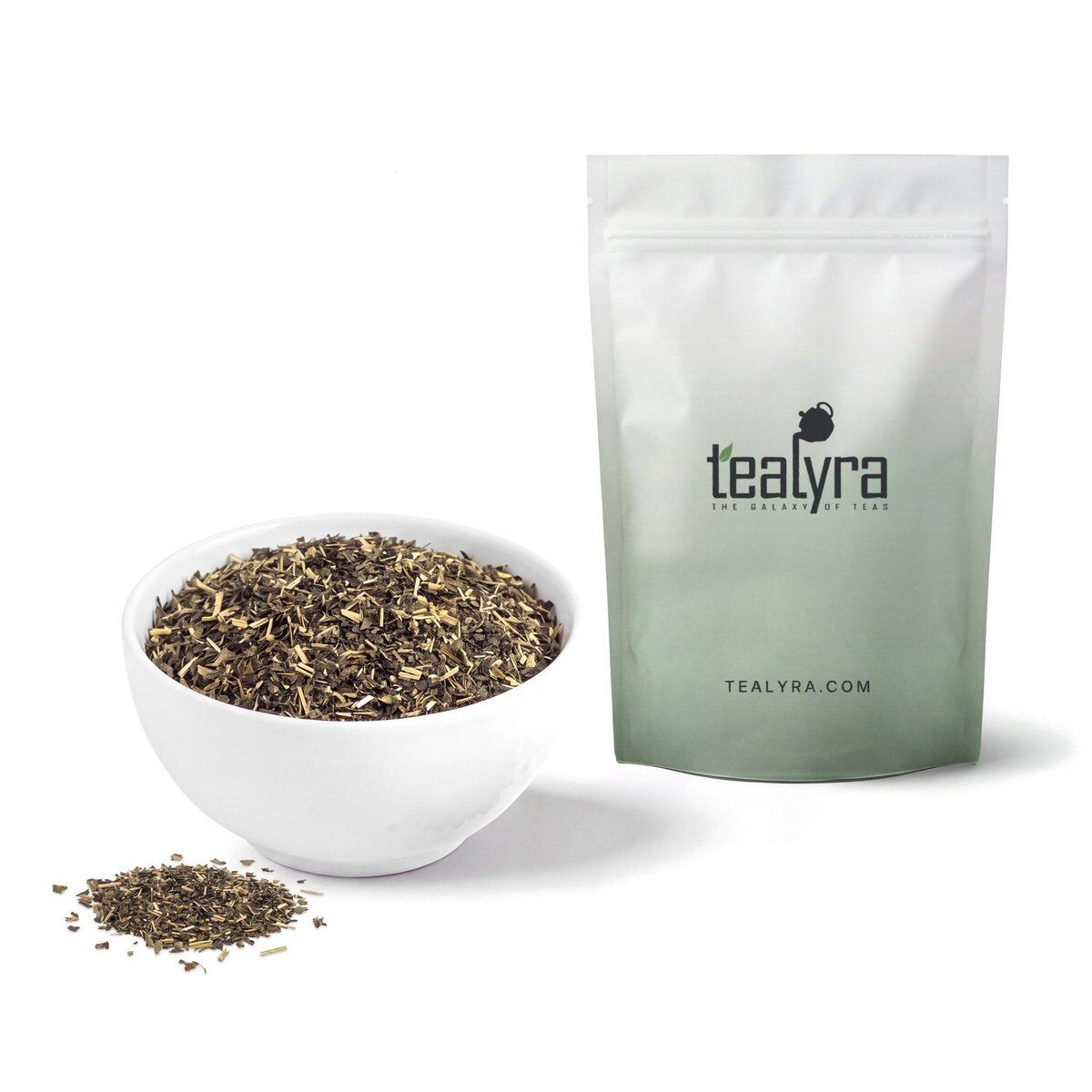
Nettle leaf is light and fluffy, so measure by the heaping teaspoon rather than the level one. Covering the cup or pot matters more than with most herbs: the fresh, green aroma is volatile and escapes with the steam.
Nettle leaf is finely cut, so use a fine-mesh infuser, a paper filter or a French press. A mug basket with large holes will let flakes through.
Put 10 g (about 5 heaping teaspoons) of dried nettle in 1 L of cold water, leave it in the fridge overnight, and strain in the morning. Cold-brewed nettle is softer and sweeter than the hot cup, almost cucumber-like, and it keeps in the fridge for two days. Add a few mint leaves and a lemon wheel to the jug.
Pure nettle is pleasant, but it really opens up with a partner. These three pairings are the ones we come back to; each uses half nettle and half the other herb by volume, brewed the same way as above.
Nettle also blends quietly into green tea. Add a pinch of dried nettle to a Japanese sencha steeped at 75 °C and you get a deeper, more vegetable-sweet cup. You will find nettle, peppermint and lemon verbena together with dozens of other single herbs in our herbal tea collection.
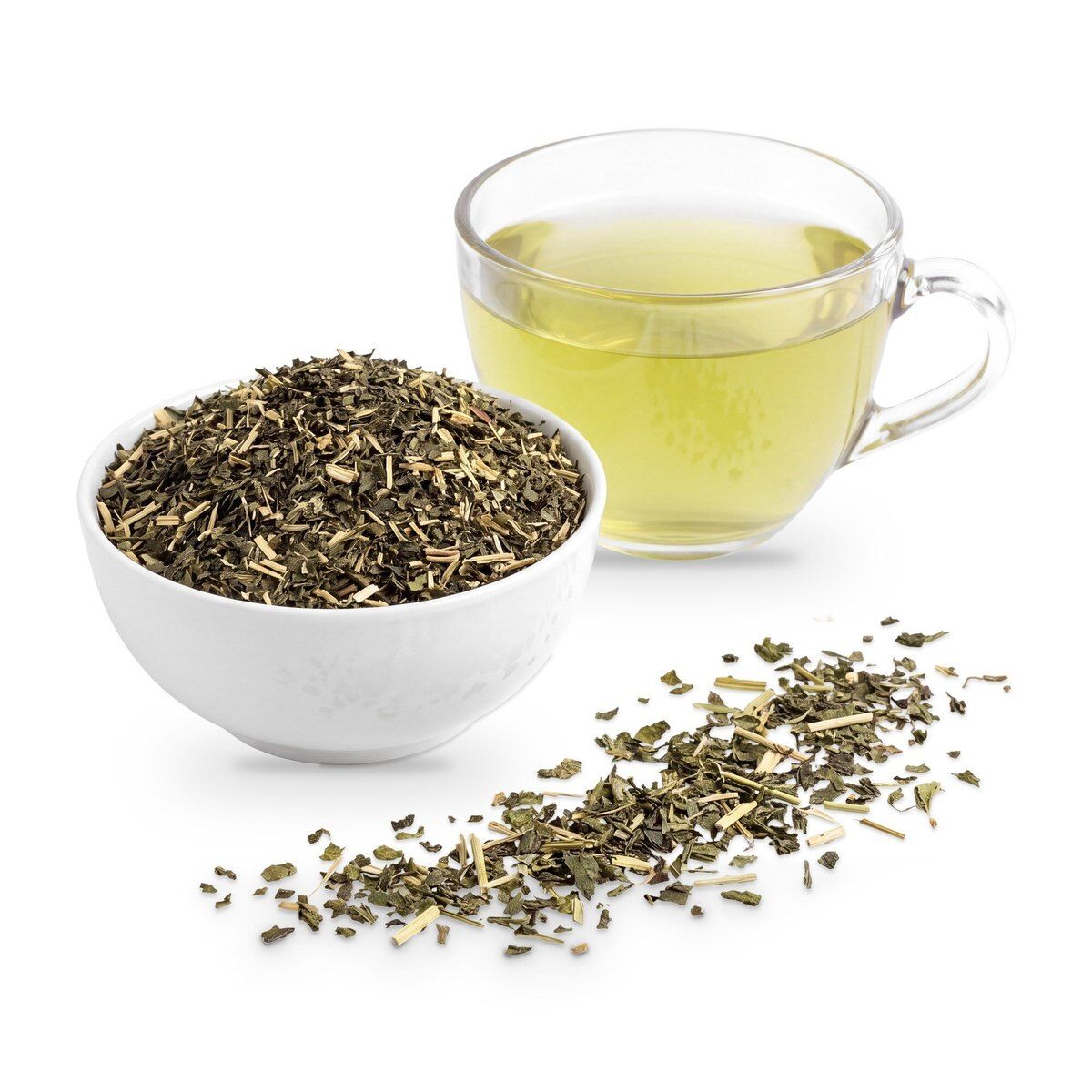
Foraging nettle is a spring pleasure in much of the country, but from October to April the dried leaf is what most Canadians drink. Look for leaf that is clearly green, not grey or brown, cut into small even flakes with few stems, and sold in a resealable pouch that keeps moisture out. Our Nettle Leaf Tea is pure dried stinging nettle leaf, nothing added, sold on tealyra.ca in a 100 g pouch, which makes about 50 cups.
Store the pouch sealed in a cupboard away from the stove. Dried nettle holds its colour and aroma for roughly a year; after that it still brews safely but tastes flatter. If you buy in bulk, keep most of it sealed and decant a small jar for daily use.
Nettle tea tastes green, grassy and lightly savoury, close to a mild spinach broth with a clean, dry finish and almost no bitterness. Lemon, peppermint or a little honey brighten it.
No. Stinging nettle is a wild plant unrelated to the tea bush, so nettle leaf tea is naturally caffeine-free.
Steep 1 heaping teaspoon of dried leaf per 250 ml of water at 95 to 100 °C for 7 to 10 minutes, covered. It does not turn bitter if left longer, and the leaf can be steeped a second time.
No. Drying breaks down the stinging hairs completely, and hot water finishes the job. Dried nettle leaf is as safe to handle and brew as any other herbal tea.
Yes. Young spring tops picked with gloves, rinsed and dried in a warm, airy spot for a few days make good tea. Pick away from roadsides and sprayed fields, and dry the leaves fully before storing them.
Burdock root tea is a caffeine-free root infusion with an earthy, sweet, slightly bitter taste. Roasted vs raw root, how to brew it and…

Spiced apple tea for cold days: what goes into an apple cinnamon blend, how to brew it hot or as a stovetop mulled tea, three loose leaf…

Rooibos vs honeybush: two caffeine-free South African teas compared by taste, aroma, color and brewing, with a side-by-side table and tips…