


Rooibos vs Honeybush: Taste, Caffeine and How to Brew
Rooibos vs honeybush: two caffeine-free South African teas compared by taste, aroma, color and brewing, with a side-by-side table and tips…
Country, language & currency
or
The Tea Journal · Fruity Tea · Herbal Tea
By the Tealyra Tea Team · · 5 min read

In short: spiced apple tea is dried apple, cinnamon and a little hibiscus or black tea brewed hot, and it tastes like the first sip of warm cider at an orchard stand. Brew 2 teaspoons (about 3 g) of a loose leaf apple blend in 8 oz (240 ml) of water just off the boil, 208 to 212°F (98 to 100°C), for 5 to 7 minutes. Fruit blends never turn bitter, so steep long and strong. Below: what is in a good spiced apple blend, three ways to make it, which Tealyra teas to try and how to turn a pot into a mulled drink for the whole table.
Most spiced apple teas are not tea at all. They are fruit and herb blends: dried apple pieces for body and sweetness, cinnamon for warmth, a few hibiscus petals or rosehips for a tart edge and a rosy color, and sometimes cloves, orange peel or a touch of vanilla. Without tea leaves they are caffeine free, which is why they are so popular after dinner and with kids.
A second style blends the same fruit and spices with black tea. That version is darker, brisker and takes milk well, closer to a light chai than to a cider. Both are worth having in the cupboard. The fruit version is the one for a cold afternoon; the black tea version is the one for a slow breakfast.
Here are the three apple blends we reach for from November to February, with what each one does best.
| Tea | Base | Caffeine | Taste | Best for |
|---|---|---|---|---|
| Warm Apple Cider | Apple, hibiscus, cinnamon, spices | None | Baked apple, cinnamon, tart finish | Hot cider substitute, mulled pot |
| Sweet Apple Chamomile | Chamomile, apple, herbs | None | Honeyed apple, soft floral | Evening cup, a gentler profile |
| Caramel Almond Apple | Honeybush, apple, almond, caramel | None | Dessert-like, nutty, naturally sweet | With milk, as a latte |
If you want the black tea style, add a teaspoon of plain loose leaf black tea to any of these when you brew. An Assam or an English Breakfast gives the malt and depth; the fruit blend gives the apple and spice.
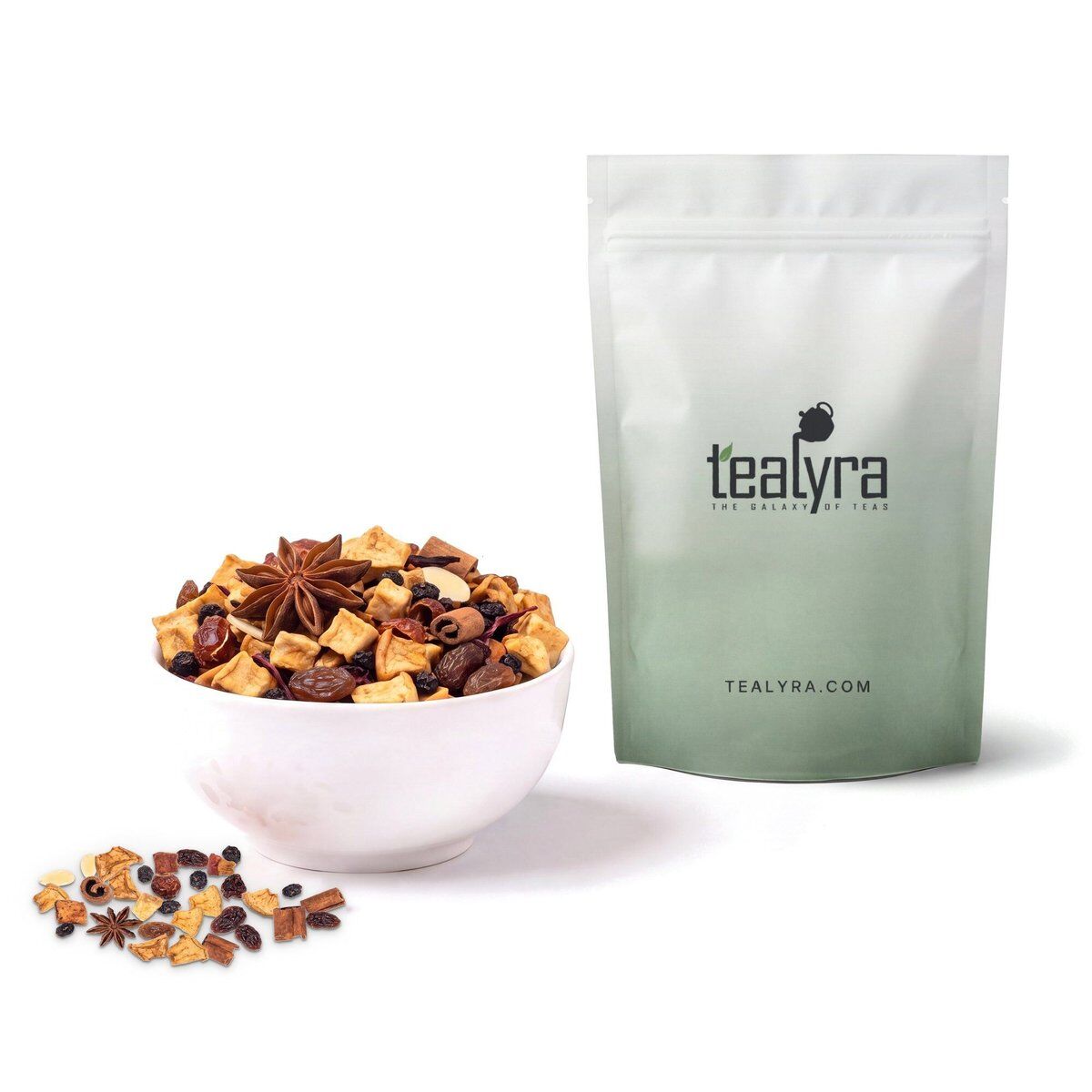
Fruit pieces are dense and release their flavor slowly, so this is one of the few teas where more leaf and more time always help.
A glass mug shows off the color: Warm Apple Cider brews a deep ruby red from the hibiscus, Sweet Apple Chamomile a pale gold, Caramel Almond Apple a warm amber.
This is the recipe that gets passed around at the holidays. It has the comfort of mulled cider with a fraction of the sugar, and it is caffeine free, so it works at any hour.
Ingredients (serves 6 to 8):
Method: bring the water to a boil in a saucepan, turn off the heat and add the tea, fruit and whole spices. Cover and steep 10 minutes. Strain into a warmed pot or back into the rinsed pan, stir in the sweetener and keep it warm on the lowest heat, never boiling, for up to two hours. Serve in heatproof glasses with a fresh apple slice on top. Leftovers keep in the fridge for three days and are very good cold over ice.
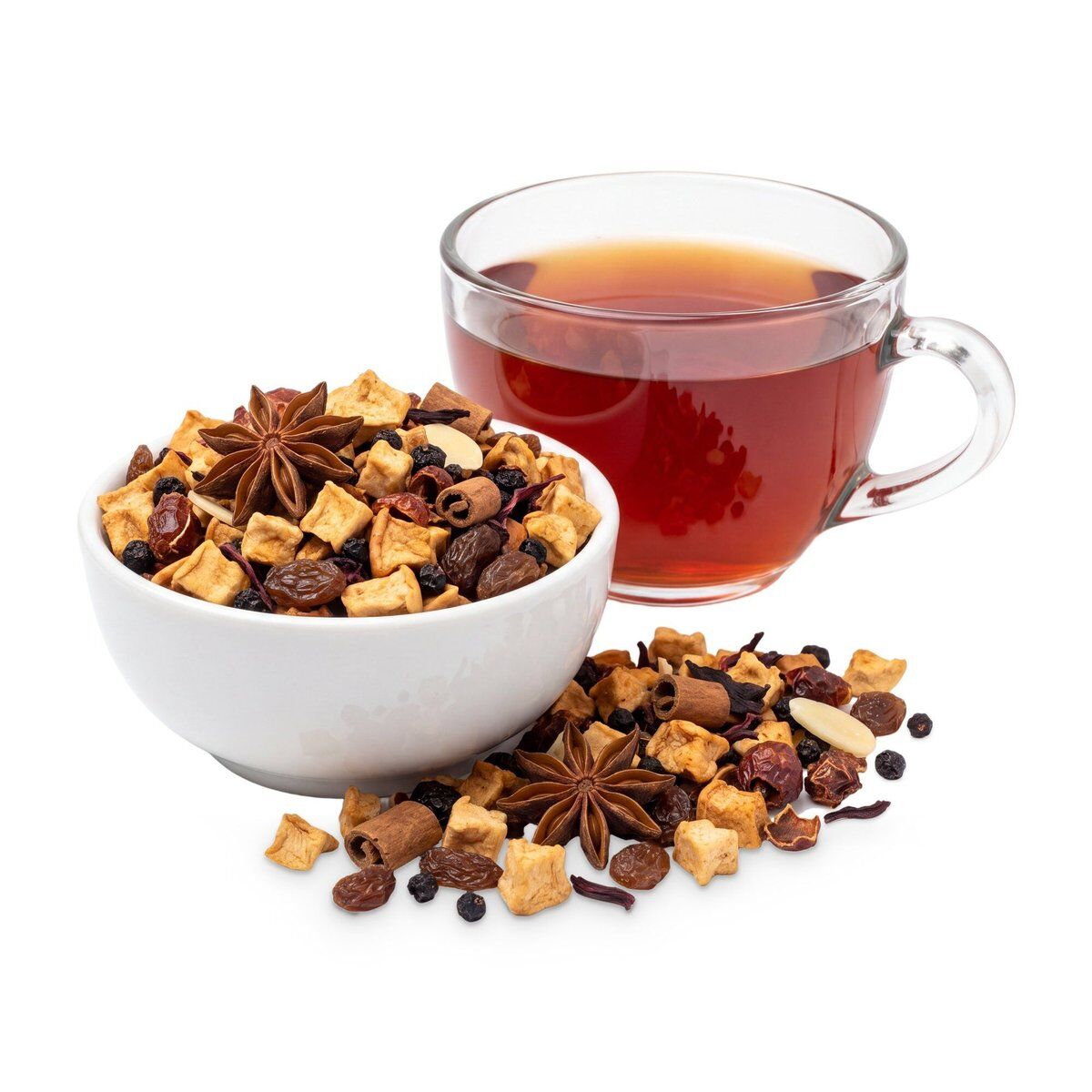
Spiced apple tea likes anything with butter and warm spice: oatmeal cookies, a slice of pound cake, cheddar on crackers, roasted nuts. On a holiday table it bridges the gap between dessert and the end of the evening when nobody wants coffee. For a tea-and-dessert pairing that leans more toward chocolate and nuts, a pu-erh or a roasted oolong does the job, but for pie, crumble and strudel, apple tea with apple dessert is a match that simply works.
Not if it is a fruit and herb blend, which most are. If the blend lists black or green tea among the ingredients, it will have the caffeine of that tea, roughly 30 to 50 mg per cup for black tea.
Yes. Simmer a sliced apple with a cinnamon stick in 2 cups (480 ml) of water for 15 minutes, then strain. It will be lighter and less tart than a blend with hibiscus; a slice of lemon brings the brightness back.
Two heaping teaspoons, about 3 g, per 8 oz (240 ml). Fruit pieces are heavier than tea leaves, so by weight you use roughly twice as much as you would for a black tea.
Once, with good results. Add a minute or two to the steeping time. A third steep is usually too thin.
Maple syrup or honey, which match the baked-apple flavor. Rock sugar is the neutral option if you want sweetness without changing the taste.
Rooibos vs honeybush: two caffeine-free South African teas compared by taste, aroma, color and brewing, with a side-by-side table and tips…

Butterfly pea flower tea brews a deep blue cup and turns purple with lemon. What it tastes like, how to brew it hot or iced, and how to…

Rosehip tea from the hips of wild roses: what it tastes like, why Canadian hedgerows are full of it, how to brew dried rosehips, and the…