


High Mountain Oolong: How to Choose and Brew It
What makes Taiwan high mountain oolong special, how to choose Ali Shan or Mei Shan, and how to brew it gongfu style or in a mug, with times…
Country, language & currency
or
The Tea Journal · Brewing Guides · Oolong Tea
By the Tealyra Tea Team · · 6 min read

In short: Oolong is drunk plain, without milk or sugar, from a small cup, and the same leaves are brewed several times. A standard cup holds roughly 30 to 50 mg of caffeine, about half of a cup of coffee, so two to four cups a day is the usual comfortable range for most adults. Brew it at 185 to 205°F (85 to 95°C), start with short steeps, and drink it after a meal if a strong tea on an empty stomach does not agree with you.
This guide answers the questions people ask most: how much oolong to drink, when, with or without food, and how to brew it so it tastes the way it should.
Oolong sits between green and black tea: the leaves are partly oxidized, from about 15% to 80%, then shaped and often roasted. Light oxidation gives floral, buttery teas such as Ali Shan or Tie Guan Yin; heavy oxidation and roasting give deep, mineral teas such as Da Hong Pao. The whole, tightly shaped leaves open slowly, which is why oolong is made for several short infusions rather than one long one. Browse the full range on our oolong tea page.
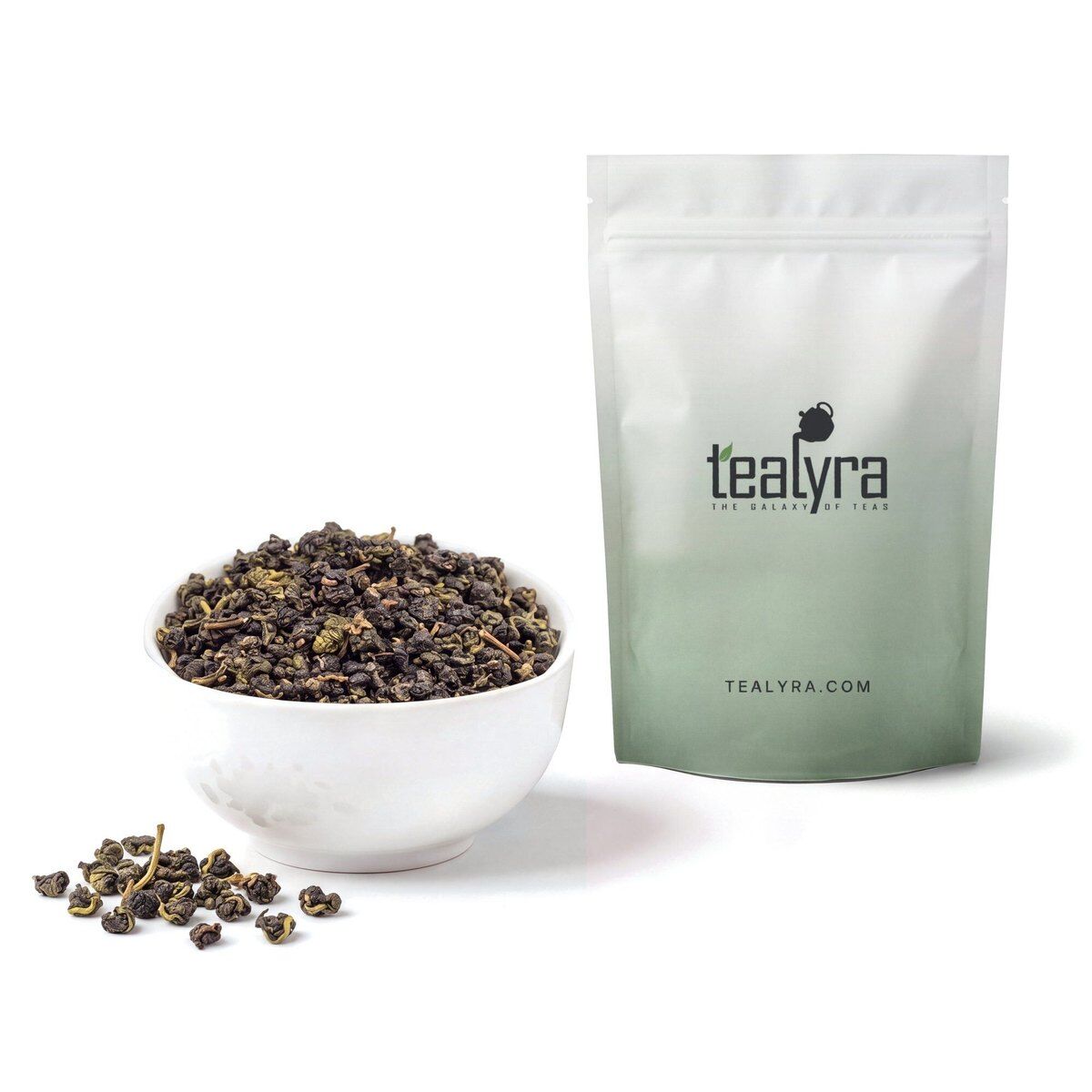
A typical 8 oz (240 ml) cup of oolong contains roughly 30 to 50 mg of caffeine. For comparison, the same cup of brewed coffee has about 95 mg, black tea 40 to 70 mg, and green tea 20 to 45 mg. The exact number depends on four things you control:
There is no caffeine-free oolong. If you are sensitive to caffeine, keep oolong to the morning and early afternoon and switch to a herbal infusion in the evening.
Most adults are comfortable with two to four cups a day. That keeps total caffeine from tea in the 100 to 200 mg range, well under the 400 mg a day that health authorities commonly cite as a moderate intake for healthy adults. If you also drink coffee or energy drinks, count those too.
Can you drink oolong every day? Yes. In Fujian and Taiwan it is the everyday tea. The habit to copy is the pacing: small cups, several infusions, spread across the day, rather than one large mug gulped quickly.
| Situation | Suggested amount | Why |
|---|---|---|
| New to oolong | 1 to 2 cups a day | Lets you learn how the caffeine and the tannins feel for you |
| Regular tea drinker | 2 to 4 cups a day | Comfortable range for most adults |
| Caffeine-sensitive | 1 cup, before 2 pm | Oolong has less caffeine than coffee, but it is not caffeine-free |
| Gongfu session | 5 to 8 short infusions of one leaf batch | Counts as about one strong cup in total caffeine |
Oolong is traditionally served after a meal or with food. Light rolled oolongs pair well with seafood, steamed dumplings, fruit and mild cheeses. Roasted oolongs stand up to roast meat, mushrooms, nuts and dark chocolate. Drinking it with or after food also matters for comfort: strong tea on an empty stomach can feel harsh for some people. If a cup upsets your stomach, have it with breakfast or lunch instead of first thing, use a little less leaf, and shorten the steep. If you have a medical condition, are pregnant, or take medication that interacts with caffeine, ask your doctor how much tea is right for you.
The best time of day for flavor is mid-morning or early afternoon, when your palate is fresh and the caffeine will have worn off by bedtime.
There are two ways. Both work; the second shows far more of what the tea can do.
A small glass or porcelain teapot with a removable infuser does the job if you do not own a gaiwan. See our teapots for both styles.
For a deeper look at the Taiwanese style, read our high mountain oolong guide.
Usually a little more. A cup of oolong lands around 30 to 50 mg, green tea around 20 to 45 mg, both well below coffee at roughly 95 mg.
Many people do without any trouble. If strong tea first thing feels harsh for you, drink it with or after a meal, use less leaf, and keep the first steep short.
It contains caffeine, so most people stop by mid-afternoon. A late infusion from already-brewed leaves carries less caffeine than a fresh first cup, but it is not caffeine-free.
Traditionally no. Oolong is naturally smooth and slightly sweet, and milk covers the floral or roasted notes that make it worth drinking. Try it plain first.
Three times Western style, and six to eight or more times gongfu style. When the color turns pale and the flavor thin, the leaves are done.
What makes Taiwan high mountain oolong special, how to choose Ali Shan or Mei Shan, and how to brew it gongfu style or in a mug, with times…

Discover Da Hong Pao, China's legendary rock oolong tea. Learn about its rich history, unique roast profiles, and how to brew the perfect…

Discover the true art of iron guan yin tea. Explore its orchid aroma, Anxi craft, floral and roasted styles, plus essential brewing tips…