


Genmaicha: What It Is, How It Tastes and How to Brew It
Genmaicha is Japanese green tea with toasted brown rice. Learn how it tastes, how to brew it hot or cold, and how it compares with sencha…
Country, language & currency
or
The Tea Journal · Brewing Guides · Green Tea
By the Tealyra Tea Team · · 5 min read

In short: Long Jing, or Dragon Well, is a pan-fired green tea from the hills around West Lake in Hangzhou, China. Its flat, sword-shaped leaves brew a pale jade cup that tastes sweet, nutty and lightly toasted, often compared to fresh chestnuts and spring peas. Brew 2-3 g per 8 oz (240 ml) of water at 175°F (80°C) for 2-3 minutes, and expect two or three good infusions.
Ask a tea lover in China to name the country's most famous green tea and the answer is almost always Long Jing. It has been served to emperors, given to visiting heads of state and sipped in Hangzhou teahouses for centuries. The good news is that you do not need a teahouse to enjoy it: a tall glass and a kettle you can set to 175°F are enough.
Long Jing (龙井, pronounced roughly "long jing") means "Dragon Well". The name comes from a spring near Hangzhou, in Zhejiang province, where legend says a dragon lived. The tea grows on the hills around West Lake, a landscape so tied to the tea that the best-known grade is simply called West Lake Long Jing.
Like all green tea, Long Jing comes from the Camellia sinensis plant and is not oxidized. What makes it different is how it is shaped and dried: by hand, or by machines that copy the hand movements, in hot woks.
The flat shape is the signature of the tea, and it comes from a careful process:
Pan-firing is the key difference from Japanese green teas such as sencha, which are steamed. Steaming keeps a grassy, marine taste; pan-firing gives Long Jing its warm, nutty sweetness. If you like the Chinese style, our guide to Chinese green tea styles covers its close relatives.
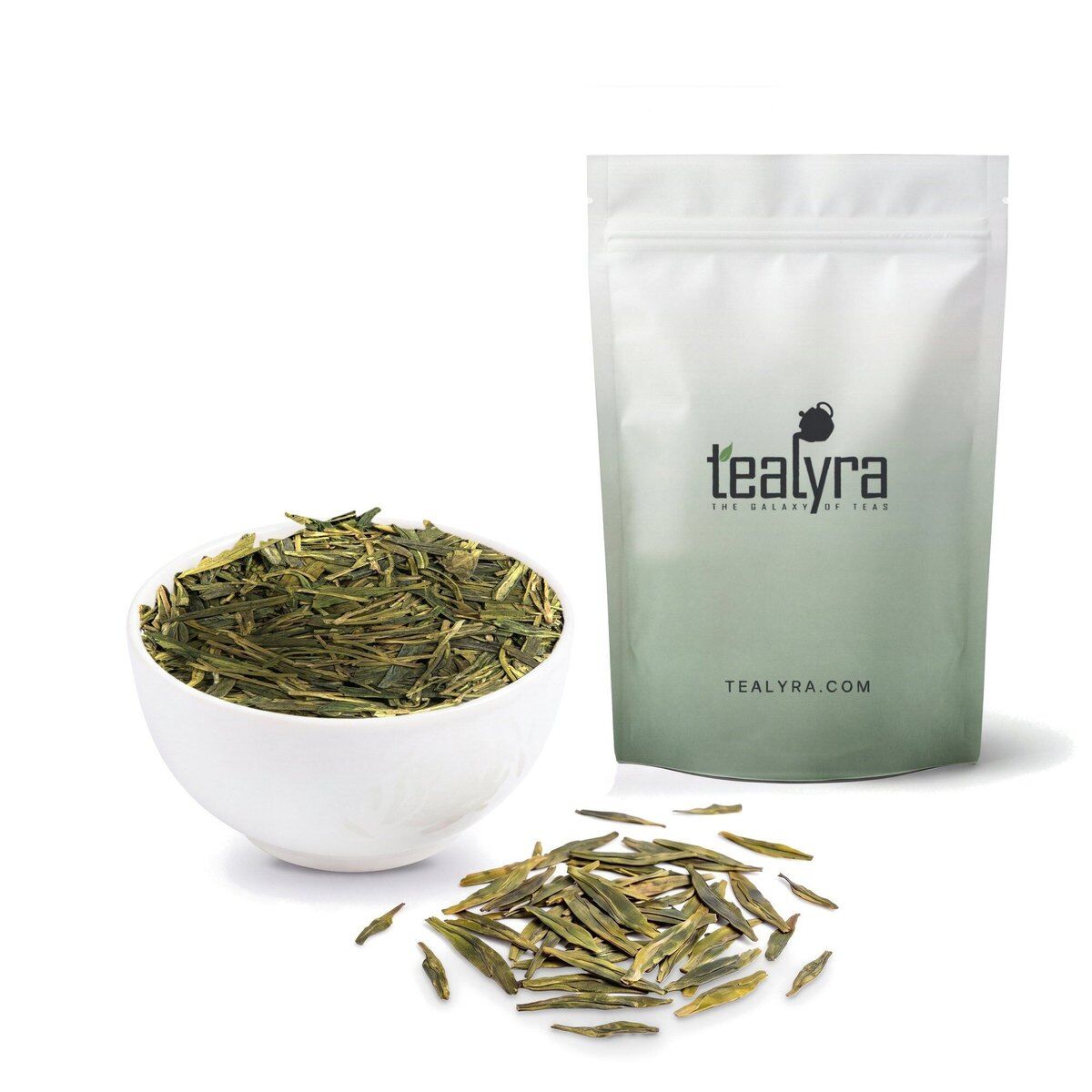
A good cup of Dragon Well is smooth and gentle, with very little bitterness when brewed at the right temperature. Typical notes include:
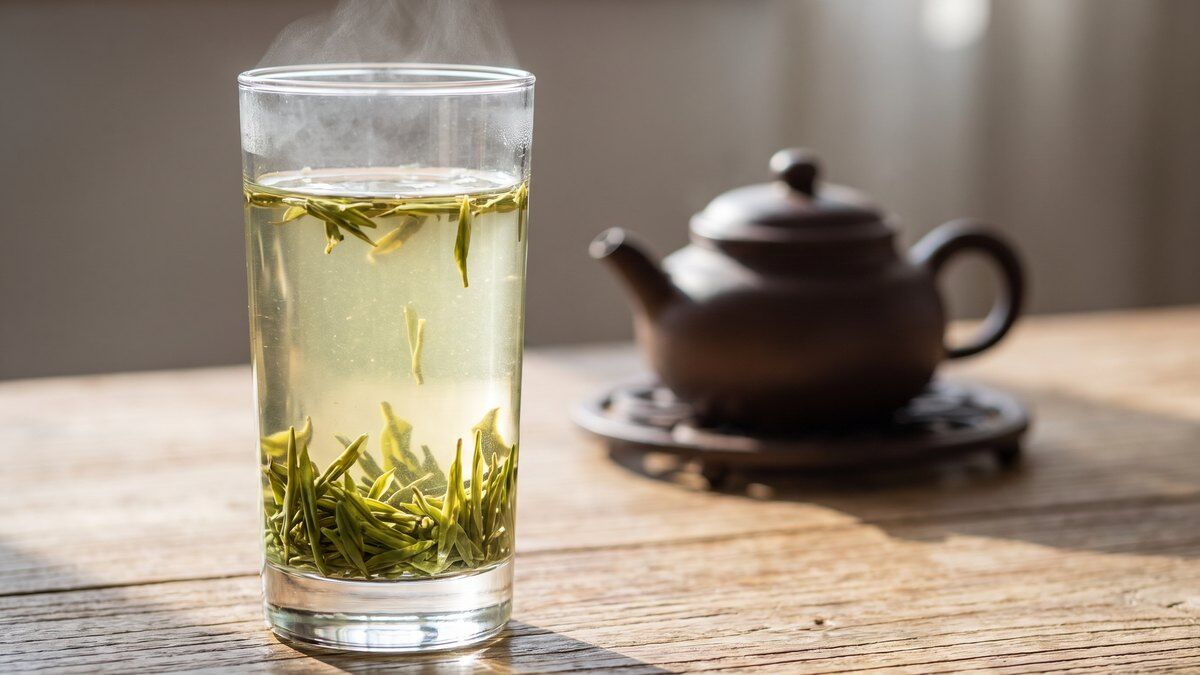
The liquor is pale yellow-green and very clear. Higher grades taste rounder and sweeter; everyday grades are a little more toasty and robust, which many people prefer for a daily cup.
You will see Dragon Well sold under several names. This table shows what the labels usually mean:
| Label | What it means | Taste | Best for |
|---|---|---|---|
| West Lake Long Jing | Grown in the original West Lake area | Sweet, floral, very smooth | Special occasions, gaiwan sessions |
| Pre-Qingming (Ming Qian) | Picked before early April | Delicate, fresh, sweet | Slow tasting |
| Zhejiang Long Jing | Same style from nearby areas | Nutty, toasty, fuller | Daily cup, larger mugs |
| Later spring pickings | Larger leaves, later harvest | Bolder, more roasted | Everyday drinking, cold brew |
Look for flat, smooth, evenly shaped leaves with a jade to yellow-green color and a fresh, toasty smell. Dull, broken or brownish leaves usually mean an older or lower grade.
Two good starting points: Long Jing Dragon Well is a nutty, easy everyday Dragon Well, and Supreme West Lake Long Jing Dragon Well is the sweeter, more refined choice for a slow afternoon.
The most common mistake is water that is too hot. Boiling water cooks the leaves and turns the cup bitter. Aim for 165-180°F (75-80°C), which is about the point where the kettle starts to hiss, or let boiled water rest for 3-4 minutes.
| Method | Leaf | Water | Time | Infusions |
|---|---|---|---|---|
| Teapot or mug infuser | 2-3 g per 8 oz (240 ml) | 175°F (80°C) | 2-3 min | 2-3 |
| Gaiwan (gongfu) | 4-5 g per 3.5 oz (100 ml) | 175°F (80°C) | 30-45 sec, then +15 sec | 4-5 |
| Cold brew | 6-8 g per 32 oz (1 l) | Cold filtered water | 6-8 hours in the fridge | 1 |
A glass or porcelain pot is best because it does not hold on to old aromas. You can find suitable ones among our teapots.
Long Jing contains caffeine, usually a little less than a cup of black tea and much less than coffee. The exact amount depends on the grade and how long you steep it; shorter steeps and cooler water give a lighter cup. Most people enjoy it in the morning or early afternoon. Its gentle, nutty taste pairs well with light foods such as steamed fish, rice dishes, dumplings and mild cheeses.
Dragon Well is at its best within the first months after harvest. Keep it in an airtight, opaque container away from light, heat and strong smells, and close the bag tightly after each use. A cool cupboard is fine; if you buy a larger amount, keep a small jar for daily use and leave the rest sealed. Explore more pan-fired teas in our Chinese green tea collection, or browse all green teas.
Yes. Long Jing is the Chinese name and Dragon Well is its English translation. Both refer to the same flat, pan-fired green tea from Zhejiang province.
The leaves are pressed by hand against a hot wok during firing. This shapes them into smooth, flat blades and gives the tea its toasted, nutty flavor.
Use water at 165-180°F (75-80°C). Boiling water makes the cup bitter and flattens the sweet, chestnut-like notes.
Some people in Hangzhou do. The soft brewed leaves are tender and are sometimes cooked with shrimp in a classic local dish, Long Jing shrimp.
Two or three times in a glass or teapot, and four or five times in a gaiwan with short steeps. Add 15-30 seconds to each new infusion.
Genmaicha is Japanese green tea with toasted brown rice. Learn how it tastes, how to brew it hot or cold, and how it compares with sencha…

A Canadian guide to jasmine tea: how Jasmine Dragon Pearls, Bi Luo Chun and Silver Needle differ in flavour, plus water temperature, ratios…

How to make Moroccan mint tea at home: gunpowder green tea, fresh spearmint and sugar, the rinse step, the high pour and easy variations…