


Japanese Green Tea: Types and How to Brew Each One
Japanese green tea types explained: sencha, gyokuro, bancha, kukicha, hojicha, genmaicha and matcha, how each tastes, and the water…
Country, language & currency
or
The Tea Journal · Green Tea · Teaware
By the Tealyra Tea Team · · 5 min read

In short: blooming tea is a hand-tied ball of green or white tea leaves wrapped around dried flowers that opens into a bloom in hot water. It makes one of the easiest tea gifts to get right, because the show is the point: give it with a clear glass teapot, brew it at 85°C for 3 to 5 minutes, and it re-steeps two or three times. For Canadian gift-givers this season, the best options are a box of 12 assorted blooms for someone who already owns a glass pot, or a set with the teapot included for someone who does not. Order early so it clears the holiday shipping rush.
Every December the same question comes up: what do you give the person who "doesn't need anything"? A tea that turns into a flower on the table is a small, affordable answer that still feels special. This guide covers what blooming tea is, which gift to choose, how to brew it and how to wrap and send it across Canada without stress.
Blooming tea, also called flowering tea, comes from Fujian and Yunnan in China. Skilled tea makers sew young green or silver-tipped white tea leaves around a bundle of dried flowers, usually jasmine, globe amaranth, lily, chrysanthemum or marigold, then shape and dry the bundle into a tight ball. In hot water the leaves slowly unfurl and the flowers rise on a stem of leaf, which is why a Jasmine Lily Tower looks exactly like its name once it has opened.
The taste is gentle: a light green tea base with a floral, slightly sweet note from the jasmine. It is naturally low in caffeine compared with black tea and pleasant enough that people who do not normally drink green tea enjoy it. Our general guide, What Is Flowering Tea?, goes deeper into how the balls are made.
| Gift | Best for | What's inside | What to add |
|---|---|---|---|
| Flowering Tea Gift Box, 12 pcs | Someone who already owns a glass teapot or large glass mug | 12 assorted hand-tied blooms, each individually wrapped | A brewing note card |
| Glass Teapot + 12 Blooming Tea Gift Set | A first-time blooming tea drinker, a host, a family gift | Clear glass teapot plus 12 blooms | Nothing, it is complete |
| Single blooms (Jasmine Lily Tower and others) | Stocking stuffers, teacher gifts, office exchanges | One bloom each, 2 to 3 steeps | A clear glass cup from the teapots and teaware page |
A good rule: if you are not sure whether the person has a clear pot, give the set. Blooming tea brewed in an opaque mug is just a mild green tea, and the gift loses its reason for being.
Brewed blooms can sit in the pot for an afternoon as a centrepiece. If the tea starts to taste strong, pour it off and refill with cooler water.
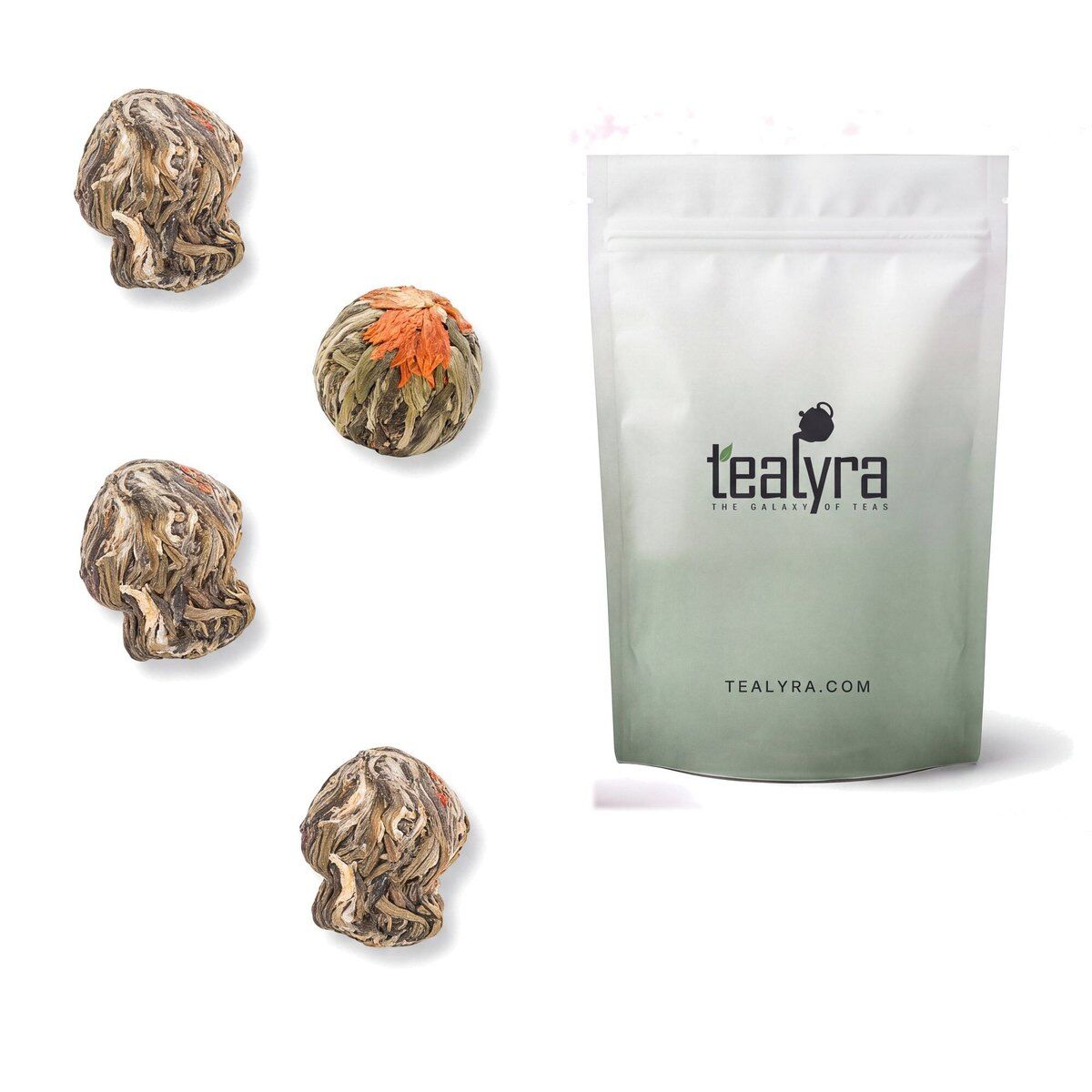
Blooming tea travels well because each ball is individually wrapped and the gift boxes are rigid. A glass teapot set is packed for shipping, but if you are rewrapping it yourself, keep the pot inside its original box and wrap around that. Store the blooms in a cool, dry cupboard until gifting: they keep for a year or more sealed, and the flowers do not fade.
The one thing to plan is timing. December parcels to the Atlantic provinces, the Prairies and the North take longer than parcels within Ontario or to the West Coast, and every carrier posts a cut-off date for Christmas delivery. Order in the first half of December, or earlier for the territories, and you avoid paying for express. If the gift is going to a tea lover who wants a full kit, pair the set with a loose leaf favourite from our tea collections in the same box.
Yes, a little. The base is green or white tea, so a 400 ml pot brewed for 4 minutes has roughly a third of the caffeine of the same pot of black tea, and less with each re-steep.
Two or three times. The first steep is the most floral; the second is the most balanced; by the third the cup is light and gentle. Add about a minute to each later steep.
You can, and the tea will taste fine, but you will not see the bloom. A clear glass mug of 400 ml or more, or a glass teapot, is the right vessel.
Yes. They are food-grade dried flowers such as jasmine, lily, globe amaranth and chrysanthemum, chosen for aroma and colour. You drink the tea and leave the bloom in the pot.
Nothing. They are two names for the same hand-tied tea ball; "display tea" and "artisan tea" are also used.
Japanese green tea types explained: sencha, gyokuro, bancha, kukicha, hojicha, genmaicha and matcha, how each tastes, and the water…

Jasmine dragon pearls grades compared: leaf pluck, scenting rounds, pearl size and silver tips, and how our four grades differ in the cup…

Sencha explained: how Japan's everyday green tea is made, what it tastes like, the grades and steaming styles to know, and how to brew it…